
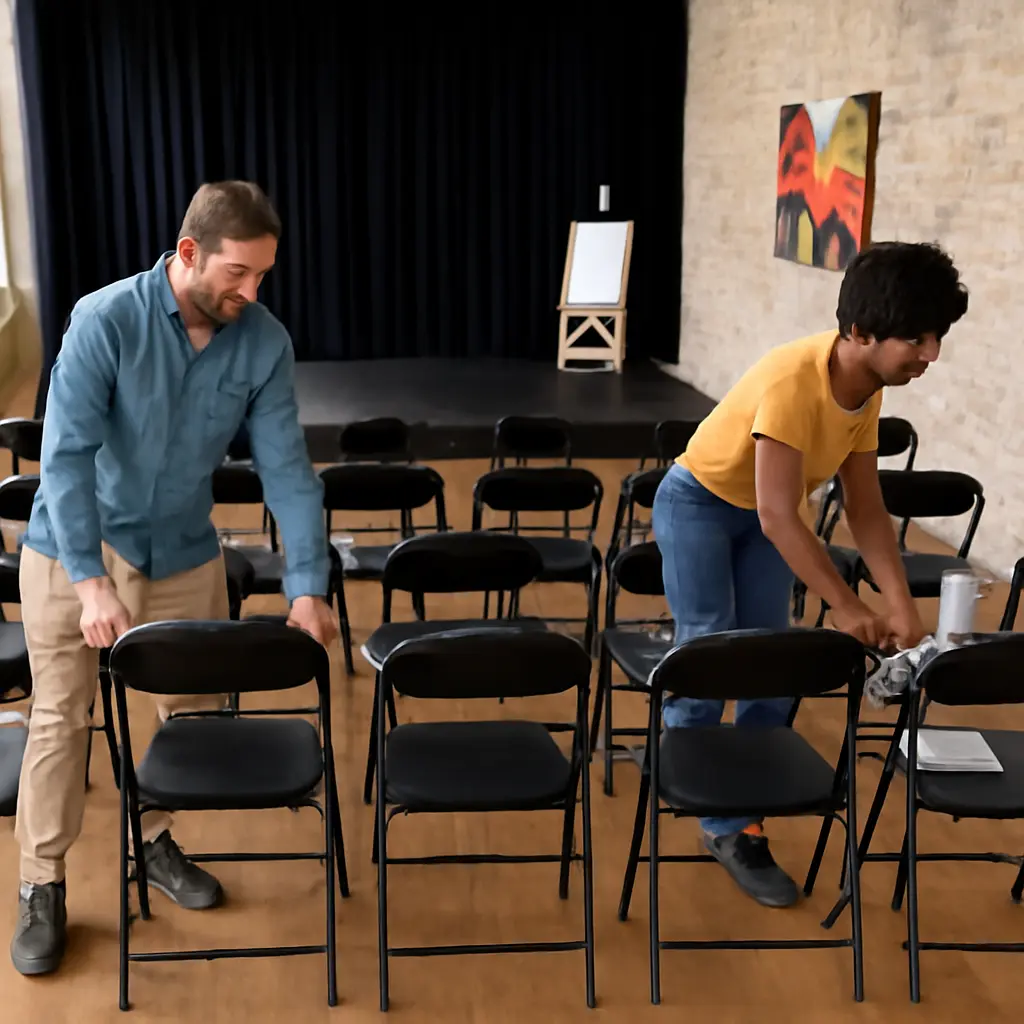
Arts nonprofits rely on more than artists and audiences: volunteers and paid staff help turn creative work into accessible programs, exhibitions, performances, and community services. The scale is significant: the National Council of Nonprofits reports that nonprofits account for about 10% of private-sector employment in the United States, while the National Council on the Arts has documented the substantial contribution of arts and cultural activity to the national economy. Yet many arts organizations operate with small teams and tight budgets, making volunteer time and staff expertise especially consequential. Understanding how these people contribute—from governance and fundraising to production and audience access—helps explain how arts nonprofits sustain their missions and where better support can make the biggest difference.
How volunteers and staff sustain arts nonprofit operations
An arts nonprofit is a mission-driven organization that uses artistic or cultural activity to serve a public or community purpose rather than distribute profits to owners. Volunteers and staff are the people who carry out that mission. The National Council of Nonprofits describes volunteers as people who freely offer time and service to support an organization; staff members are paid employees with defined responsibilities. In practice, the distinction can be less simple: volunteers may hold specialized roles, while staff may depend on unpaid help to deliver programs.
The U.S. Bureau of Labor Statistics estimated that 60.7 million people volunteered through or for organizations in 2021, representing 23.2% of the population age 16 and older. That national figure is not specific to arts nonprofits, but it signals the breadth of the volunteer resource available to community organizations. At the same time, nonprofit employment is a major part of the workforce: the National Council of Nonprofits, drawing on federal labor data, puts the sector at roughly one in ten private-sector jobs. For arts organizations, volunteer participation and paid expertise are complementary inputs—not substitutes for one another.
Volunteers: mission support, not simply free labor
Volunteers contribute time, skills, relationships, and community knowledge without wages. In arts nonprofits, common roles include greeting visitors, ushering, supporting festivals, documenting collections, mentoring young artists, assisting with communications, and serving on boards or committees. The Independent Sector’s annual estimates of the value of volunteer time provide a useful way to recognize this contribution, though an estimated dollar value does not capture the trust, lived experience, or local connections volunteers may bring.
Volunteer roles work best when organizations provide clear expectations, preparation, supervision, and appropriate safeguards. A volunteer usher may need only a concise orientation and an emergency plan; a volunteer handling archival materials or working with children may require more specialized training and screening. This structure protects participants while making service meaningful and reliable.
Staff: professional knowledge and continuity
Staff members provide paid, accountable labor that keeps an organization’s work continuous. Depending on its size, an arts nonprofit may employ artistic directors, curators, teaching artists, production technicians, development professionals, marketers, finance staff, and administrators. Their responsibilities can involve specialized training, legal and financial compliance, donor stewardship, program evaluation, and the long-term care of facilities or collections.
The National Endowment for the Arts and the U.S. Bureau of Economic Analysis have documented the economic reach of arts and cultural production through the Arts and Cultural Production Satellite Account. Its findings show that arts and cultural production supports substantial employment and economic activity across industries. Those national totals do not describe every nonprofit’s staffing model, but they underline that cultural work is real work—requiring skills, planning, and compensation.
How volunteer and staff roles differ across arts nonprofits
The mix of volunteers and employees varies with an organization’s mission, scale, location, and operating model. A neighborhood theater, a museum, and a community arts education group may all rely on volunteers, but the tasks and risks differ. Separating roles by function helps organizations use people’s time well, preserve professional accountability, and avoid expecting unpaid workers to carry responsibilities that require paid, sustained expertise.
Governance and board service
Board members are usually volunteers who provide governance rather than day-to-day management. They help set mission and strategy, oversee finances, support executive leadership, and ensure the organization meets its legal and fiduciary obligations. BoardSource emphasizes that nonprofit boards govern collectively; individual board members should not treat board service as a substitute for staff management.
In an arts organization, a board may also help connect the nonprofit with artists, patrons, businesses, and local institutions. Fundraising can be part of board service, but it should be matched to clear expectations and practical support. A board’s community connections are valuable only when the organization also has staff capacity to steward relationships and deliver the programs those relationships support.
Programs, production, and public engagement
Program and production work includes preparing performances, exhibitions, classes, workshops, and public events. Paid staff often coordinate schedules, contracts, technical requirements, artist support, accessibility, and safety. Volunteers can extend that work through front-of-house service, event assistance, outreach, and other well-defined tasks.
The National Endowment for the Arts’ Survey of Public Participation in the Arts tracks how people engage with arts activities, including attending events and participating in creative practices. Such participation data helps organizations understand audiences, but attendance alone is not a complete measure of impact. Volunteers and staff also help create welcoming conditions for people who may face barriers related to cost, transportation, language, disability, or a lack of familiarity with cultural institutions.
Fundraising, communications, and administration
Development and administrative functions sustain the work behind the scenes. Staff may prepare grant applications, manage budgets, maintain donor records, coordinate communications, and report outcomes to funders. Volunteers may introduce potential supporters, help with campaigns, or contribute professional skills, but fundraising and compliance processes need clear oversight and continuity.
A practical division of labor assigns recurring, deadline-sensitive responsibilities to staff where possible and uses volunteers for bounded projects with suitable supervision. For example, volunteers might help prepare an event mailing, while staff retain responsibility for donor data, financial controls, and required grant reporting. This protects relationships and reduces the risk of errors.
How arts nonprofits can make volunteer and staff partnerships stronger
Volunteer and staff contributions become most effective when organizations plan for them as part of program design rather than adding people only when a need becomes urgent. Good coordination clarifies who decides, who performs each task, what training is required, and how results will be reviewed. It also acknowledges a central nonprofit-sector challenge: organizations can be mission-rich but resource-constrained, and unpaid help cannot replace fair pay or sustainable staffing.
Design roles around skills, access, and mission
Role design means matching responsibilities to a person’s skills, available time, and level of authority. Organizations should write concise descriptions, specify schedules and supervision, and distinguish occasional event support from ongoing operational work. They can also broaden participation by offering flexible shifts, remote tasks where suitable, accessible training, and clear reimbursement policies for approved expenses.
The National Council of Nonprofits recommends treating volunteer engagement as an organizational function that requires planning and support. For arts groups, this can include asking community members what skills they want to share, making orientation relevant to the work, and ensuring volunteers understand the organization’s artistic and public-service goals.
Invest in staff capacity and fair working conditions
Staff capacity is the time, expertise, and organizational support employees need to do their jobs well. Arts nonprofits can strengthen it by budgeting for realistic workloads, training, appropriate technology, and succession planning. The National Council of Nonprofits has highlighted workforce pressures across the nonprofit sector, including competition for qualified workers and the effect of limited resources on recruitment and retention.
A volunteer program can ease particular workload peaks, but it should not be used to conceal chronic understaffing or replace essential paid roles. Clear boundaries support both groups: employees retain responsibility for decisions and specialized duties, while volunteers receive meaningful assignments and a reliable point of contact.
Measure contribution and share recognition
Evaluation helps organizations see whether their people systems are working. Useful measures include volunteer retention, staff turnover, training completion, event coverage, program reach, and feedback from artists and participants. Counts and estimated economic values can show scale, but they should be combined with qualitative feedback about belonging, access, and the quality of the experience.
Recognition should reflect the work itself, not only hours recorded. Public thanks, learning opportunities, accessible leadership pathways, and timely feedback can make service more rewarding. Equally, fair wages, manageable workloads, and professional respect are essential forms of recognition for staff.
Real-world perspective: a community arts festival
A community arts festival illustrates how the two groups can work together. Paid staff may secure permits, contract artists, arrange insurance, manage budgets, coordinate accessibility, and maintain the production schedule. Volunteers may welcome visitors, distribute programs, help with wayfinding, and support family activities. The arrangement works when staff retain oversight of safety and logistics, volunteers receive adequate briefing, and participants know whom to contact when plans change.
The example also shows why volunteer numbers alone are a poor measure of capacity. A festival with many helpers can still struggle if it lacks paid coordination, adequate equipment, or contingency planning. Conversely, a small, well-prepared volunteer team can make a measurable difference when its assignments are specific and connected to a stable operational plan.
Conclusion: volunteers and staff are essential arts infrastructure
Volunteers and staff sustain arts nonprofits in distinct but connected ways. Volunteers contribute time, community relationships, governance, and practical support; paid staff bring continuity, specialized knowledge, and accountability. Their roles span board service, artistic production, audience engagement, fundraising, and administration, but effectiveness depends on clear boundaries, adequate training, fair working conditions, and thoughtful evaluation.
The broader implication is that arts access and cultural vitality depend not only on funding performances or exhibitions, but also on investing in the people who make them possible. Arts nonprofits can take a useful next step by reviewing role descriptions, asking volunteers and staff what support they need, and budgeting realistically for the expertise required to deliver their mission.
Sources: U.S. Bureau of Labor Statistics, Volunteering in the United States, 2021, https://www.bls.gov/news.release/volun.nr0.htm; National Council of Nonprofits, Nonprofit Impact Matters, https://www.councilofnonprofits.org/nonprofit-impact-matters; Independent Sector, Value of Volunteer Time, https://independentsector.org/resource/value-of-volunteer-time/; National Endowment for the Arts and U.S. Bureau of Economic Analysis, Arts and Cultural Production Satellite Account, https://www.arts.gov/impact/research/arts-and-cultural-production-satellite-account; BoardSource, The Board’s Role and Responsibilities, https://boardsource.org/fundamental-topics-of-nonprofit-board-service/roles-responsibilities/; National Endowment for the Arts, Survey of Public Participation in the Arts, https://www.arts.gov/impact/research/arts-data-profile-series/adp-30