
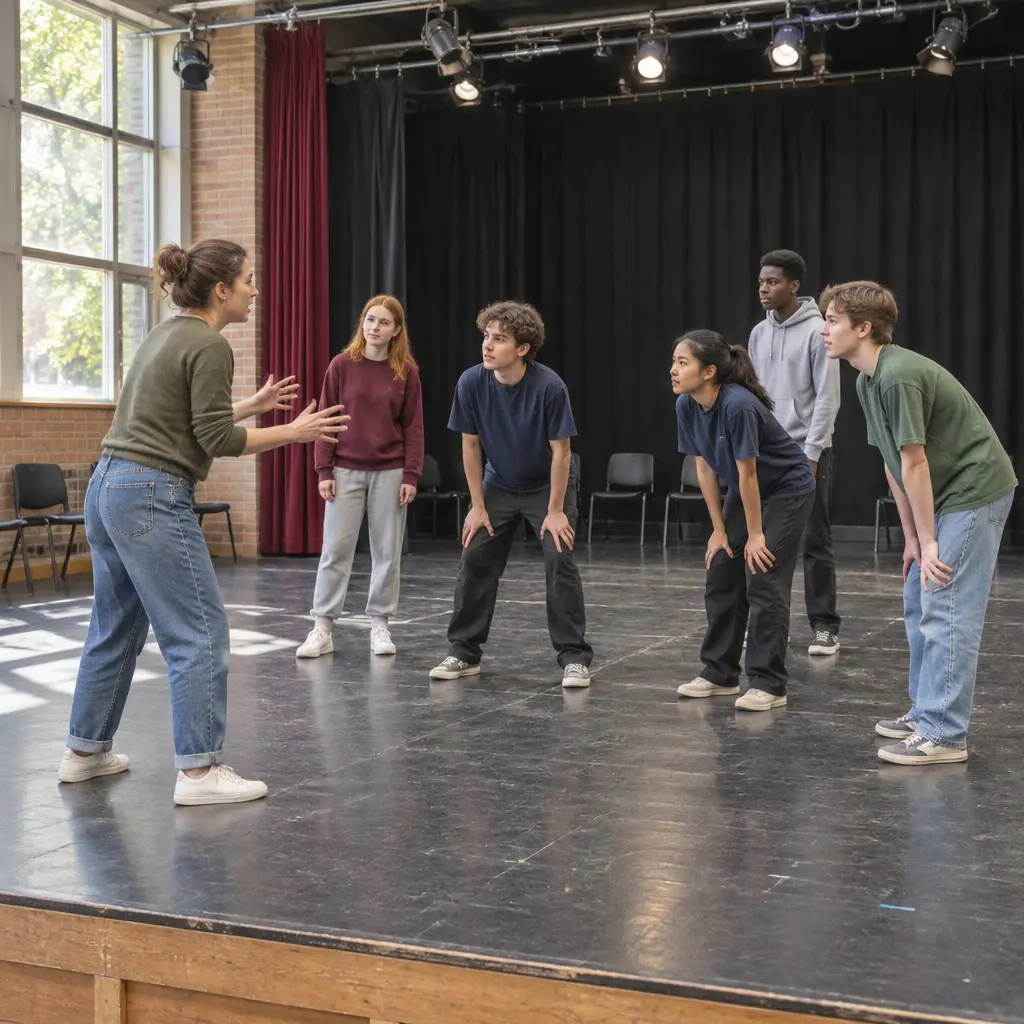
Youth theatre programs are organized learning and performance opportunities where children and teenagers develop acting and related stage skills. For beginners, they can offer an encouraging first experience; for experienced young actors, they can provide more demanding roles, advanced training, and pathways to further study. The best program fits a young person’s age, goals, experience, schedule, and support needs—not simply its reputation. This guide explains program types, how beginners and experienced actors can choose, what evidence says about arts participation, and practical ways families can evaluate safety, cost, and quality.
Build Skills Through Youth Theatre Program Training
A youth theatre program is a structured activity in which young people learn theatre skills through classes, rehearsals, productions, or a combination of these. The National Endowment for the Arts describes arts education as instruction and learning in the arts; theatre programs put that learning into practice through activities such as voice, movement, improvisation, script work, and collaboration. Programs vary substantially, so families should check what participants actually do rather than assume that every “theatre” offering includes the same training.
Theatre is both an art form and a group process. A young actor may practice a monologue alone, but a production depends on performers listening and responding to one another, as well as on stage management, design, and technical work. That combination makes youth theatre relevant to young people with different interests and levels of confidence.
Beginner classes and introductory workshops
Beginner programs introduce theatre fundamentals without requiring a performance résumé. Activities might include theatre games, improvisation, basic voice and movement, storytelling, and short scenes. A suitable introductory class explains expectations, gives participants time to practice, and treats mistakes as part of learning rather than as a reason for embarrassment.
Families can ask whether students must audition, whether a final performance is optional, and how instructors support children who feel nervous speaking in front of a group. A low-pressure format may be a better first step than a production with a demanding rehearsal schedule.
Production-based theatre and musical theatre
Production-based programs teach skills through rehearsing and presenting a play or musical. Participants may learn lines, develop characters, follow blocking, and work with a director. Musical theatre adds singing and often dance; some programs also introduce backstage roles such as costumes, props, lighting, or stage management.
A production can be a motivating way to apply skills, but the experience depends on how the program distributes learning and responsibility. Ask how casting works, whether every participant receives meaningful instruction, how rehearsal absences are handled, and whether the schedule is manageable alongside school and rest.
Advanced conservatory-style and specialist training
Advanced programs may focus on audition technique, contemporary or classical acting, script analysis, movement, voice, or college and professional preparation. Some are designed for young people with prior training; others place students by age or skill assessment. “Advanced” is not a standardized qualification, so families should look for clear entry criteria, experienced instructors, specific learning outcomes, and constructive feedback.
Young actors can also broaden their experience beyond acting. Playwriting, directing, stage management, and technical theatre offer ways to deepen understanding of how a production is made and can be valuable options for students who want to contribute without pursuing a lead role.
Choose Youth Theatre Programs by Experience and Goals
Program fit is the match between a student’s current skills and interests and the instruction, expectations, and environment an organization provides. It is not determined by age or experience alone. A first-time participant may be ready for a production, while an experienced actor may benefit more from a focused class than from another show.
The National Core Arts Standards for Theatre organize learning around creating, performing, responding, and connecting. Families can use those categories as a practical lens: Does the program help students make artistic choices, perform with purpose, reflect on their work, and connect theatre with their own experiences?
A first program for beginners
For beginners, a good starting point emphasizes participation, foundational skills, and psychological safety. Instructors should explain activities clearly, offer age-appropriate material, and make room for different personalities. A beginner does not need to be outgoing, have a large vocabulary, or already know how auditions work.
Before enrolling, ask about class size, instructor experience, the balance between games and structured instruction, and any additional costs for costumes or tickets. If the young person is unsure, a trial class or short workshop can help determine whether the setting feels welcoming.
Next steps for experienced young actors
Experienced actors often need specific, useful challenges rather than simply more stage time. They might seek deeper character work, text analysis, vocal technique, audition practice, or feedback on a self-selected goal. A strong program makes advancement visible through the content taught—not just through competitive casting or labels such as “elite.”
Ask prospective instructors how they help students progress and how feedback is delivered. Experienced students should still have room to experiment, collaborate, and learn from failure; repeated performance without reflection may offer less development than a smaller class with deliberate coaching.
Auditions, casting, and fair participation
An audition is a selection process, not a complete measure of a young person’s talent or potential. Programs differ: some cast by audition, some guarantee roles, and others use an ensemble model. Families should find out whether audition material is provided, whether callbacks are used, and what opportunities exist for students who are not cast in a preferred role.
Clear communication matters. A program should explain its casting process and expectations in advance, avoid promises it cannot keep, and treat participants respectfully. For beginners, an ensemble or workshop can provide a supportive first step; for advanced students, auditions can be useful when they are paired with transparent criteria and feedback.
Understand Youth Theatre Benefits and Evidence
Youth theatre participation can support artistic learning, collaboration, communication, and confidence, but outcomes depend on the quality and consistency of the experience. Participation alone does not guarantee improvement in academic performance or wellbeing, and research findings about arts education should not be treated as proof that every theatre program produces the same results.
The National Endowment for the Arts’ 2012 report, The Arts and Achievement in At-Risk Youth, examined associations between arts engagement and outcomes for young people using longitudinal education data. It reported positive associations for some measures, including academic and civic outcomes, while noting that the analysis identifies relationships rather than establishing that arts participation alone caused them. The report covers arts education broadly, not youth theatre exclusively.
Communication, collaboration, and ensemble skills
Ensemble theatre requires participants to listen, respond, coordinate, and share responsibility. Rehearsals can give young actors practice speaking clearly, taking direction, negotiating ideas, and supporting a group goal. These are plausible learning opportunities built into the activity; whether a student develops them depends on teaching, practice, and the specific environment.
Families can look for concrete signs of collaboration: students working in pairs, receiving chances to make creative choices, and learning how backstage and onstage roles depend on one another. A program that values the entire ensemble can offer a broader experience than one focused solely on starring roles.
Confidence, expression, and creative risk
Acting gives young people structured ways to explore characters, emotions, and stories. Practicing a scene or presenting work to an audience may help a student become more comfortable expressing ideas, though confidence develops differently for each person. Progress might mean volunteering for a line, trying a new interpretation, or giving a thoughtful peer response—not necessarily seeking a lead role.
A supportive instructor sets clear boundaries and responds to mistakes constructively. Students should not be pressured to disclose personal experiences to perform a role or to participate in exercises that make them uncomfortable. Creative challenge works best when paired with respect and choice.
Arts access and participation context
Access to theatre depends on more than interest: fees, transportation, scheduling, disability accommodations, and the availability of local organizations can all affect participation. The National Endowment for the Arts’ Survey of Public Participation in the Arts tracks engagement in arts activities across the United States and provides context for how participation varies. Its findings cover arts activities broadly, so they should not be misrepresented as a count of young people enrolled in theatre programs.
Families comparing options can ask about scholarships, reduced-cost places, accessible facilities, transportation support, and accommodations for different learning needs. Community theatres, schools, libraries, and nonprofit arts organizations may offer different formats and price points.
Evaluate Youth Theatre Program Quality and Safety
Program quality includes instruction, age-appropriate expectations, communication, inclusion, and participant safety. A polished production or well-known venue does not by itself show that students receive good teaching. Reviewing policies and observing how adults interact with young people can help families assess the experience more accurately.
Instructor qualifications and learning design
Qualified instructors combine relevant theatre knowledge with the ability to teach young people. Ask about their experience working with the age group, class objectives, student-to-instructor ratios, and how progress is assessed. Useful assessment may include verbal feedback, reflection, skill demonstrations, or a student portfolio rather than only casting outcomes.
A well-designed program can explain what students will learn and how activities build toward that goal. For example, a scene-study class might progress from script reading to character choices, rehearsal, performance, and reflection. The National Core Arts Standards provide a reference framework for discussing these learning stages.
Safeguarding and respectful boundaries
Youth safeguarding means taking practical steps to protect minors from harm and to maintain appropriate adult-child boundaries. Parents or guardians should ask about staff screening, supervision, arrival and pickup procedures, communication with students, photography and recording permissions, and how concerns are reported. Policies should be understandable and available before a child begins.
The U.S. Centers for Disease Control and Prevention’s guidance on preventing child sexual abuse emphasizes organizational policies, staff training, screening, and safe environments. Families can use those principles when asking an organization how it protects participants. For specific legal requirements, check the rules that apply in the relevant state or country.
Cost, schedule, inclusion, and accessibility
The true cost of a program may include tuition, audition fees, costumes, scripts, transport, and tickets. Rehearsal time can also be substantial, particularly before a performance. Ask for a complete cost breakdown and calendar, including mandatory calls, attendance requirements, and the policy for illness or other unavoidable absences.
Inclusion is reflected in both policy and day-to-day practice. Families can ask whether materials and spaces are accessible, whether accommodations can be discussed privately, and how the program approaches casting, representation, and respectful treatment. A program should be willing to discuss practical needs without treating access as an inconvenience.
Apply Youth Theatre Program Choices in Real Life
A simple comparison can turn a long list of classes into a manageable decision. Imagine two options: a short introductory workshop with no audition and a semester-long production with evening rehearsals. A first-time student who wants to explore may prefer the workshop; a student who already enjoys rehearsal and can meet the schedule may choose the production. Neither option is universally better—the decision depends on the young person’s goals and circumstances.
Use a program comparison checklist
Compare programs using the same questions so that appealing marketing does not outweigh practical fit. Families can record the answers and discuss them with the young person before committing.
- What will participants learn, and how much time is devoted to instruction versus rehearsal?
- Is prior experience or an audition required?
- How are casting and participation decisions made?
- Who teaches and supervises the students?
- What safeguarding, communication, and pickup policies are in place?
- What is the full cost, including optional and required expenses?
- Can the schedule, location, and facilities meet the student’s needs?
- Are accommodations, scholarships, or alternative roles available?
Set goals and review progress
A student can begin with one or two specific goals, such as speaking more clearly, learning to take stage directions, or analyzing a character’s choices. After the program, review what felt challenging, what the student enjoyed, and what they would like to try next. This reflection helps beginners choose a next step and helps experienced actors identify useful training rather than pursuing activities by habit.
If a program does not fit, that does not mean the young person has failed. A different teaching style, theatre discipline, or level of commitment may be a better match. The aim is sustained, healthy learning—not a particular role or a fixed path to professional acting.
Conclusion: Match Youth Theatre Programs to the Young Actor
Youth theatre programs range from beginner workshops and production-based classes to advanced acting and specialist training. The strongest choice aligns instruction with a young actor’s experience and goals, offers a respectful and safe setting, and makes its costs, schedule, and expectations clear. Research on arts education provides encouraging evidence of associations with some positive outcomes, but it does not guarantee identical benefits for every participant or establish theatre as a stand-alone cause.
Start by asking the young person what they hope to learn, then compare programs using their teaching approach, safeguarding policies, access, and practical demands. Consider observing a class, speaking with staff, and reviewing the National Core Arts Standards and National Endowment for the Arts resources for further context. A well-matched program can make theatre a meaningful place to practice creativity, collaboration, and growth—whether a student is stepping onstage for the first time or refining years of experience.
Sources: National Endowment for the Arts, Arts Education, https://www.arts.gov/initiatives/arts-education; National Core Arts Standards, Theatre, https://www.nationalartsstandards.org/; National Endowment for the Arts, The Arts and Achievement in At-Risk Youth: Findings from Four Longitudinal Studies, 2012, https://www.arts.gov/sites/default/files/Arts-At-Risk-Youth.pdf; National Endowment for the Arts, Survey of Public Participation in the Arts, https://www.arts.gov/impact/research/arts-data-profile-series/adp-17; Centers for Disease Control and Prevention, Preventing Child Sexual Abuse Within Youth-serving Organizations: Getting Started on Policies and Procedures, https://www.cdc.gov/child-abuse-neglect/prevention/preventing-child-sexual-abuse.html