
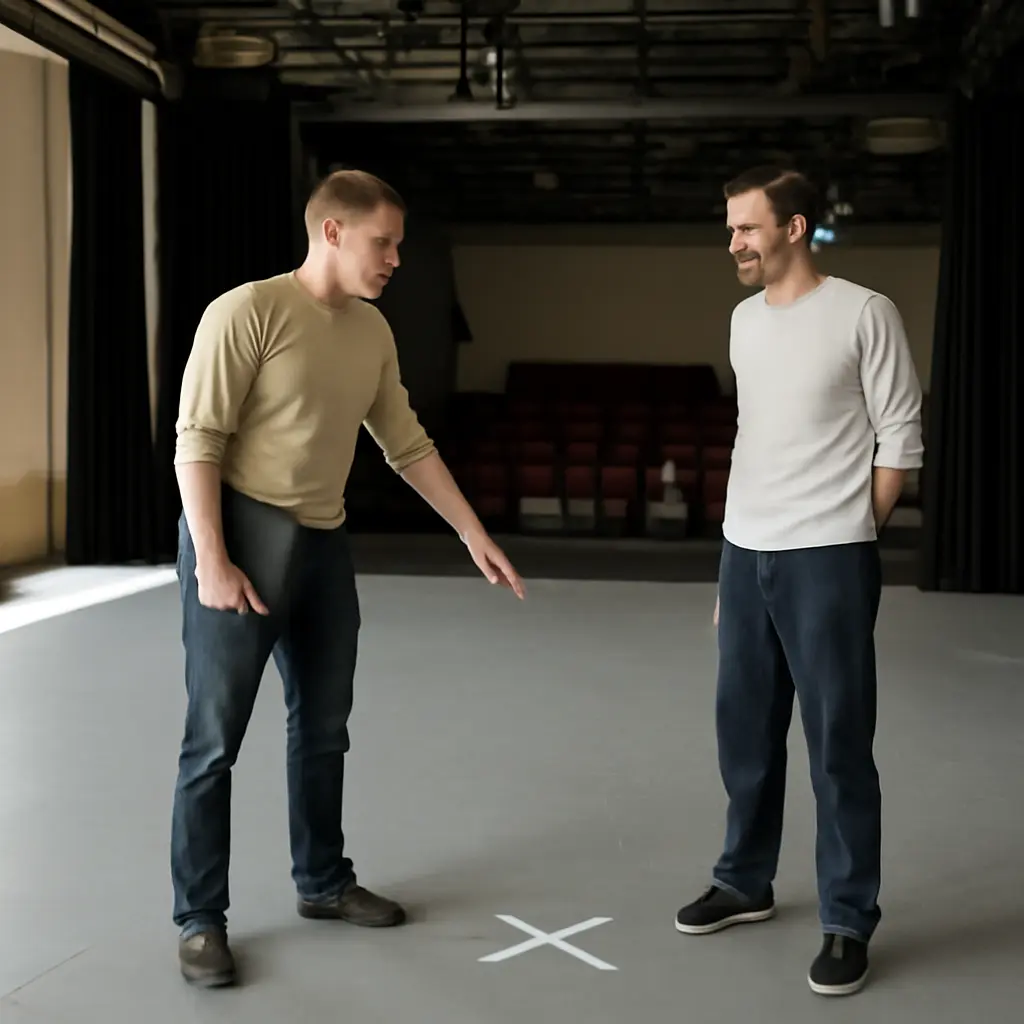
Stage management is the behind-the-scenes coordination that helps a theatrical production run safely and consistently; acting is the live interpretation of a role in performance. Their little-discussed collaboration secret is a shared system of trust, clear cues, and dependable communication: actors can take creative risks because stage managers keep the production’s practical framework steady. That relationship matters in an industry where a performance must be repeated across rehearsals and shows, often amid changing conditions. Actors’ Equity Association materials describe stage managers as central to communication and production coordination, while the U.S. Bureau of Labor Statistics counted about 111,000 actors in 2023 and notes that many work irregular schedules and face periods without employment. The sections below explain the partnership, its cueing and safety practices, and how real productions make the trust visible.
Stage management enables actor trust through structure
There is no single formal definition of “the collaboration secret” between stage managers and actors. In practice, it describes a working partnership in which the stage manager protects the shared plan—timing, cues, communication, and safety—so actors can concentrate on truthful, responsive performance. Actors’ Equity Association describes stage managers’ work through responsibilities such as coordinating rehearsals, maintaining production information, and communicating among the company and production team. The stage manager does not direct an actor’s interpretation; rather, they help ensure the conditions for performance remain reliable.
The partnership has several connected forms: rehearsal collaboration, performance cueing, safety coordination, and communication across departments. Each depends on agreed procedures and mutual respect. A stage manager’s authority to call cues is most useful when actors understand the system and can trust that cues will be given consistently; actors’ knowledge of their roles and staging, in turn, helps the stage manager identify when something needs attention.
Rehearsal collaboration turns notes into shared memory
Rehearsal collaboration is the process of capturing and communicating decisions about blocking, timing, entrances, props, and other production details. Stage managers commonly maintain a prompt book or equivalent record, while actors build physical and emotional familiarity with the material. These records are not substitutes for an actor’s preparation; they provide a common reference when a choice changes or a missed rehearsal must be covered.
The practical value is continuity. A production may involve understudies, schedule changes, or adjustments made during rehearsal. Clear records make it easier to communicate what has changed and help the company return to a shared version of the staging. The National Endowment for the Arts’ 2022 Survey of Public Participation in the Arts found that 48.3% of U.S. adults attended a live performance of some kind in the preceding year, illustrating the broad public audience for work that depends on coordinated preparation. That figure covers multiple forms of live performance, not theatre alone.
Cueing gives performance a reliable framework
Cueing is the timed communication that coordinates events such as lighting changes, sound, scene shifts, and performer entrances. In many productions, the stage manager calls technical cues from a prompt script, using agreed visual or audio signals. Actors contribute by maintaining awareness of their own entrances, listening for partner cues, and following the production’s established traffic and timing.
A cue system supports responsiveness without requiring every performance to feel mechanical. Actors can vary emphasis and emotional texture while honoring the timing needed for a lighting state, sound effect, or scene transition. The collaboration works best when cues are rehearsed, communication channels are clear, and any changes are shared with the people affected rather than left to assumption.
Stage management protects safety and communication
Safety coordination is another essential part of the partnership. The stage manager helps communicate procedures and flag concerns, while the production’s designated supervisors and qualified technicians remain responsible for their areas of expertise. Actors also have an important role: they need to report hazards, understand choreography and traffic patterns, and avoid improvising around equipment or effects without agreement.
The U.S. Bureau of Labor Statistics reports that actors frequently work irregular hours, including evenings and weekends, and that employment can be intermittent. Repeated work under those conditions makes reliable handoffs, clear schedules, and consistent safety practices more than administrative niceties. A calm, documented process can help a company address a changed prop, a blocked route, or a performance adjustment before it becomes a larger problem.
Risk communication makes trust practical
Risk communication means sharing specific, actionable information about hazards and changes. For example, if a set piece shifts, a floor becomes slippery, or an effect is unavailable, the relevant performers and crew need to know what has changed and what procedure replaces the old one. The stage manager can coordinate the message and confirm that it reaches the company; technical specialists should assess and resolve technical hazards within their expertise.
This practice is especially important when scenes involve movement, weapons, intimacy, or special effects. Actors should be able to raise a concern without being treated as disruptive, and the company should agree on how to pause, reset, and resume work. Trust is not simply friendliness: it is confidence that concerns will be heard and that established procedures will be followed.
Clear communication supports creative freedom
Communication between stage managers and actors works best when it is timely, direct, and appropriately private. A stage manager may relay a production change, clarify a call time, or pass along a director’s note, but should distinguish between logistical information and artistic feedback. Actors, meanwhile, can tell the stage manager when a change affects timing, access, or safety, helping the team respond before the issue reaches an audience.
This distinction protects both roles. The actor remains responsible for performance choices within the production’s agreed boundaries; the stage manager safeguards the process that allows those choices to happen consistently. When communication is dependable, performers spend less attention guessing about logistics and more on listening, reacting, and connecting with scene partners.
The stage manager–actor partnership adapts across a production
The collaboration changes as a show moves from rehearsal into previews and regular performances. During rehearsal, the emphasis is on recording decisions and coordinating changes. As performances begin, the focus shifts toward maintaining the agreed version of the show, communicating updates, and responding to unexpected events without compromising safety or artistic intent.
Understudies and replacements rely on shared records
Understudies and replacement performers illustrate why documentation matters. A prompt book, rehearsal reports, and consistent communication can help a performer learn entrances, blocking, prop handoffs, and cue relationships. The actor still needs rehearsal and preparation, but accurate records reduce the risk that essential information exists only in one person’s memory.
This is also where the partnership becomes visible to the audience indirectly: smooth transitions and coherent performances depend on a company’s ability to transfer knowledge. The stage manager organizes that transfer; the actor tests it in performance and identifies where clarification or additional practice is needed.
A practical example: handling a changed cue
Imagine a sound cue is delayed during a scene. The actor can continue according to the rehearsed text and timing rather than attempting an unplanned technical fix. The stage manager follows the production’s cueing procedure, communicates with the relevant operator, and records or reports the issue afterward. If the change affects the actor’s timing or safety, the team discusses and rehearses an agreed adjustment before the next performance.
This example shows the secret in practical terms: trust does not mean that nothing goes wrong. It means the company knows how to respond, who is responsible for each action, and how to restore a shared plan. A simple process diagram could show the sequence as: “notice the change → follow the established cue or stop procedure → communicate with affected people → document and rehearse any adjustment.”
Conclusion: trust is the quiet craft behind a live performance
The collaboration secret between stage managers and actors is a dependable structure that supports creative freedom. Rehearsal records preserve shared decisions; cueing coordinates the moving parts of a show; safety communication helps the company respond responsibly; and clear role boundaries allow actors to focus on performance while stage managers protect the process. Industry sources offer no single statistic for the value of this relationship, but employment data and audience participation figures underscore the scale and demanding conditions of live performance.
For actors, stage managers, and emerging theatre-makers, a useful next step is to agree early on communication channels, cueing conventions, safety procedures, and how changes will be documented. Explore Actors’ Equity Association guidance and the U.S. Bureau of Labor Statistics’ occupational information for further context. Onstage, the audience may never notice this partnership—and that is often a sign that it is working.
Sources: Actors’ Equity Association, Stage Manager, https://www.actorsequity.org/resources/Producers/StageManager/; U.S. Bureau of Labor Statistics, Actors, https://www.bls.gov/ooh/entertainment-and-sports/actors.htm; National Endowment for the Arts, 2022 Survey of Public Participation in the Arts, https://www.arts.gov/impact/research/arts-data-profile-series/adp-31